Application of Nano Silicon Powder as Negative Electrode Material in Lithium Batteries
Principle of Action
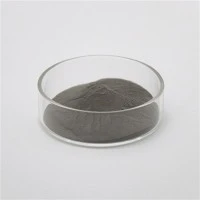
Due to the high absorption rate of nanosilicon in lithium batteries, the use of nanosilicon powder in lithium batteries can significantly increase the capacity (theoretically up to 4000mA/h). Using nano silicon powder and graphite as raw materials, replacing nano carbon powder, as negative electrode materials for lithium batteries, silicon/graphite composites were prepared by mechanical ball milling. The structure and performance of the materials were characterized by XRD, SEM, and electrochemical testing. Different mass ratios of silicon and graphite were ball milled, and the corresponding composites were charged and discharged. The optimal ratio of silicon and graphite was found, with a value of 1:9. Composing Si-C composite materials can effectively reduce the expansion caused by the absorption of lithium ions by silicon, increase the affinity with the electrolyte, facilitate dispersion, and improve cycling performance. Using nano silicon powder to make nano silicon wires for use in the negative electrode material of rechargeable lithium batteries, or coating graphite on the surface of nano silicon powder as the negative electrode material of rechargeable lithium batteries, can increase the capacitance and charge discharge cycle times of rechargeable lithium batteries by more than three times. The experimental results show that the obtained material has both higher cycling performance than pure nano silicon and higher reversible capacity than graphite, while significantly increasing the capacity of lithium batteries. When the mass ratio of silicon to graphite is 4:6, the capacity decay is faster. After 25 cycles, the capacity is 200mA. h/g, so the silicon content in the composite should not be too high. If the silicon content is high, the graphite cannot disperse the silicon well, and the chances of contact between nanosilicon increase, leading to agglomeration and a decrease in Coulombic efficiency and cycling performance. When the mass ratio of silicon to graphite is 3:7, Although the reversible capacity of the composite after 25 cycles is greater than the reversible capacity when the mass ratio of silicon to graphite is 4:6 (about 240mA. h/g), it can be seen from the curve that the attenuation is still fast. It can be seen that when the mass ratio of silicon to graphite is 1:9 and 2:8, the cycling performance is better, while 1:9 is better. Due to the fact that the price of nanosilicon is much higher than that of graphite, if applied in production practice, a silicon to graphite ratio of 1:9 is more economical. Compared with pure graphite, The reversible capacity of the composite with a mass ratio of 1:9 is greatly improved, which is more than twice that of graphite. The cycling performance is also good, reaching 310mA.h/g after 30 cycles. Silicon and silicon-containing materials have a high specific capacity as negative electrode materials for lithium-ion batteries, and the theoretical capacity of silicon is 4200mA.h/g. The graphite/nanosilicon composite prepared by mechanical ball milling method is used as negative electrode materials for lithium-ion batteries. This composite material reflects the high lithium storage capacity of silicon and good graphite cycling performance The characteristic of small volume effect. The experimental results show that the optimal silicon/graphite mass ratio is 1:9. Electrochemical performance tests show that the composite material has significantly improved cycling performance compared to pure silicon electrodes and has a reversible capacity higher than graphite, which is expected to replace graphite as a new generation of negative electrode material for lithium-ion batteries.
Main purpose:
1. Using nano silicon powder to make nano silicon wires for use in the negative electrode material of rechargeable lithium batteries, or coating graphite on the surface of nano silicon powder as the negative electrode material of rechargeable lithium batteries, has increased the capacitance and charge discharge cycle times of rechargeable lithium batteries by more than three times.
2. Nano silicon powder is used in high-temperature resistant coatings and refractory materials.
3. Nano silicon powder and diamond are mixed under high pressure to form silicon carbide diamond composite material, used as cutting tools!
Apr 08, 2023
Application of Nano Silicon Powder as Negative Electrode Material in Lithium Batteries
Previous
Send Inquiry