The role and characteristics of ferronickel
As an alloying element additive in the steelmaking industry, it can improve the flexural strength and hardness of steel. In cast iron, it can make its structure uniform and increase its density. It can also be used as an additive for nickel-containing or nickel-chromium-containing cast iron rolls and other casting alloys. .
Appearance features
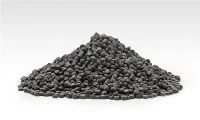
Jagged fracture, this mineral is not common, it is produced in lumps and granular aggregates. Iron gray, dark gray or black, streak iron gray. Opaque, fresh surface is metallic luster.
ferronickel smelting
Silicate oxide ore can be smelted by pyrometallurgy, and nickel can be obtained by reduction, melting and refining. When reducing, it is necessary to make the nickel oxide completely changed into metallic nickel. The ferronickel will separate from the lighter slag during melting. The nickel content of ferronickel depends on the selectivity of the partial reduction process. Coke is used as reducing agent, and ferrosilicon can also be used as reducing agent. In order to remove the impurities carbon, sulfur, phosphorus and chromium in the crude ferronickel, refining must be carried out.
Direct partial reduction of ferronickel with carbon in an electric furnace
The ore is carbothermically reduced to ferronickel in a submerged arc furnace, followed by refining.
ferronickel classification
Ferronickel is generally classified according to taste, that is, nickel content. The more popular domestic classification method is to divide ferronickel into blast furnace ferronickel and electric furnace ferronickel according to the smelting equipment. Among them, the taste of blast furnace ferronickel is generally low, and most of them contain less than 8% nickel. , and the electric furnace nickel iron generally contains more than 8% nickel.
Uses of ferronickel
The biggest use of ferronickel is for stainless steel charge. As a substitute for nickel, under normal circumstances, 200 series stainless steel can directly use low-grade ferronickel, and 300 series stainless steel can use 8% or more ferronickel.