CuCrZr alloys can be used not only at room temperature but also in high-temperature environments. Researchers from the Beijing General Research Institute of Nonferrous Metals and other institutions studied the tensile and thermal properties of copper alloys manufactured by laser powder bed (LPBF) at high temperatures (600°C).
1,3D printing and heat treatment of CuCrZr alloy

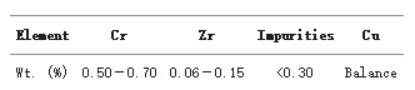
This study used CuCrZr powder with a particle size of 10-69 μm to print on a 316L substrate using green laser printing.
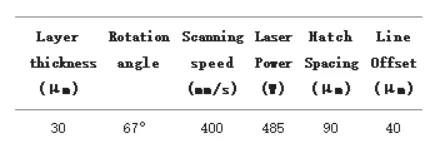
Direct aging heat treatment: 500°C × 1h, furnace cooling.
2,High-temperature thermal conductivity of CuCrZr alloy

Within the temperature range of 25°C to 900°C, the specific heat capacity of CuCrZr alloys prepared by LPBF increased from 0.38 J·g⁻¹·K⁻¹ to 0.50 J·g⁻¹·K⁻¹; the thermal diffusivity α(T) decreased from 99 mm²·s⁻¹ to 65 mm²·s⁻¹; and the thermal conductivity λ(T) decreased from 329 W·m⁻¹·K⁻¹ to 287 W·m⁻¹·K⁻¹.
3,High-temperature tensile properties of CuCrZr alloys prepared by LPBF.
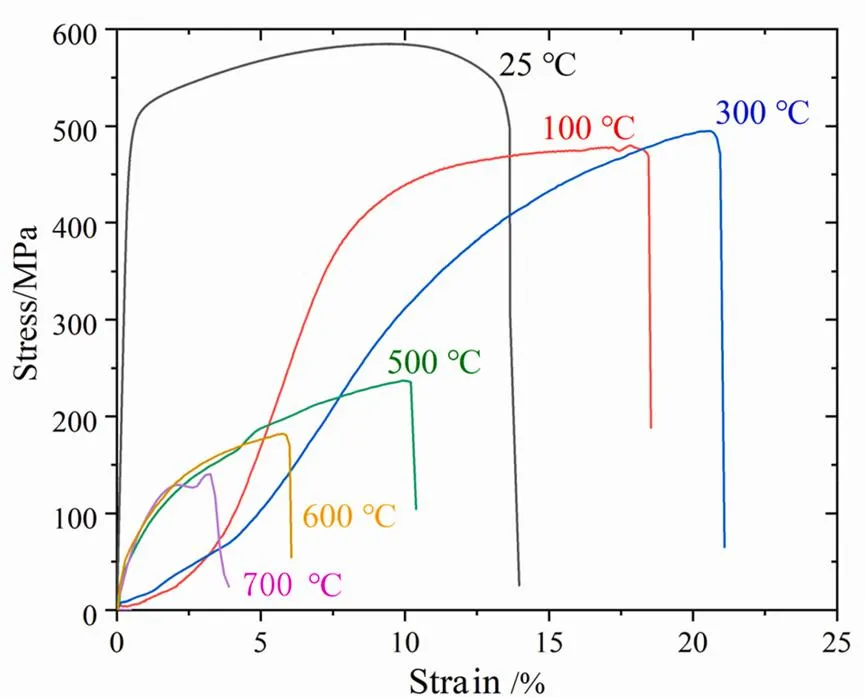
Room temperature: Tensile strength (UTS): 585 MPa, Elongation (EL): 14.4%;
100°C: Tensile strength decreases to 482 MPa, while plasticity improves, and elongation is 18.0%;
300°C: Alloy strength and plasticity increase slightly (UTS: 493 MPa, EL: 21.1%);
600°C: Strength and plasticity begin to decrease simultaneously (UTS: 180 MPa, EL: 6.1%), at which point the ductile-brittle transition occurs;
700°C: Alloy tensile properties deteriorate significantly (UTS: 140 MPa, EL: 3.8%).


4,Influence of manufacturing method on the high-temperature properties of CuCrZr alloy.

5,Within the high-temperature range of 300–700°C, the tensile
properties obtained in this study are comparable to those of similar additively manufactured CuCrZr alloys.
In another study, at temperatures below 300°C, the thermal properties of CuCrZr alloys prepared by electron beam powder bed melting (EB-PBF), regardless of whether they were in the prepared or heat-treated state, were significantly superior to those of laser powder bed melting (LPBF) samples. The mechanism is as follows:
①.Difference in energy absorption
Copper alloys have a much higher absorption rate for electron beams (>80%) than near-infrared/green laser beams (10–74%).
②. Powder Layer Thickness Effect
The layer thickness of EB-PBF process (50–70 μm) is typically greater than that of LPBF (20–40 μm). A thicker powder layer leads to a reduced cooling rate.
③.Microstructure Evolution: The repeated melting and solidification during the LPBF process generates a high dislocation density, resulting in a significantly higher residual stress compared to the EB-PBF sample.
④.Differences in Scanning Strategies
C.EB-PBF employs a simple 0°/90°/180° rotational scan, resulting in coarse, regular grains and a strong <100> fiber texture; while LPBF's 67° rotational scan leads to an irregular, fine-grained structure and forms a strong <110> fiber texture along the forming direction.
In summary, the combined effects of residual stress, crystal orientation, and fine grain structure result in LPBF-prepared alloys having inferior thermal properties compared to EB-PBF samples, but superior mechanical properties.
6,Material manufacturing dry goods
① The CuCrZr alloy exhibits good tensile properties at 600 °C (tensile strength UTS: 180 MPa, elongation EL: 6.1%). Dislocation-to-dislocation interactions, high-density body-centered cubic nanoscale Cr and Zr-rich precipitates, large-angle grain boundaries, and suppressed recrystallization contribute to maintaining these good tensile properties at high temperatures.
② This alloy exhibits excellent thermal conductivity, which decreases slightly to approximately 290 W/(m·K) at 600 °C. This is attributed to the residual bcc nanoscale Cr and Zr-rich precipitates and the reduction of high-density dislocations. The decrease in thermal conductivity with increasing temperature is due to the continuous static recovery and static recrystallization, leading to over-aging, precipitate aggregation, and phonon scattering caused by crystal defects and inverse scattering.