Metal powder materials for 3d printing
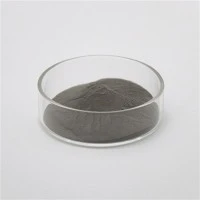
Metal 3D printing is a 3D printing technology that uses metal powder to directly print metal parts, also known as metal powder sintering (SLM). 3D printing metal powder must have good plasticity, and must also meet the requirements of fine powder particle size and relatively high particle size distribution. Narrow, high sphericity, good fluidity and high bulk density requirements. Currently, the metal powders used in most 3D printers include stainless steel, aluminum alloys, cobalt-chromium alloys, copper alloys, titanium alloys and nickel alloys. Iron-based alloys are engineering The most important and most used metal material in technology is mostly used for the forming of complex structures, and is widely used in aerospace, automobile, shipbuilding, machinery manufacturing and other industries.
The type of metal powder and the 3D printing process used determine the properties of the final product
stainless steel powder
Relatively cheap metal printing materials, cost-effective, good corrosion resistance, high strength, can quickly and efficiently manufacture small batches of complex industrial parts.
Aluminum alloy powder
At present, the aluminum alloys used in metal 3D printing mainly include aluminum silicon AlSi12 and AlSi10Mg. Aluminum silicon 12 is a lightweight additive used to produce metal powders with good thermal properties. The combination of silicon and magnesium enables aluminum alloys to have higher strength. and stiffness, making it suitable for thin-walled and complex geometries, especially in applications with good thermal properties and low weight. Aluminum alloys are the most widely used class of non-ferrous structural materials in industry, with low densities and higher High strength, close to or surpassing high-quality steel, and good plasticity. Research shows that aluminum alloys for 3D printing can achieve dense parts, small structures, and mechanical properties comparable to or even better than casting parts, and compared with traditional processes, zero The quality of parts can be reduced by 22%, but the cost can be reduced by 30%.